
Sourcing Dry Firewood: 7 Questions Every Buyer Should Ask
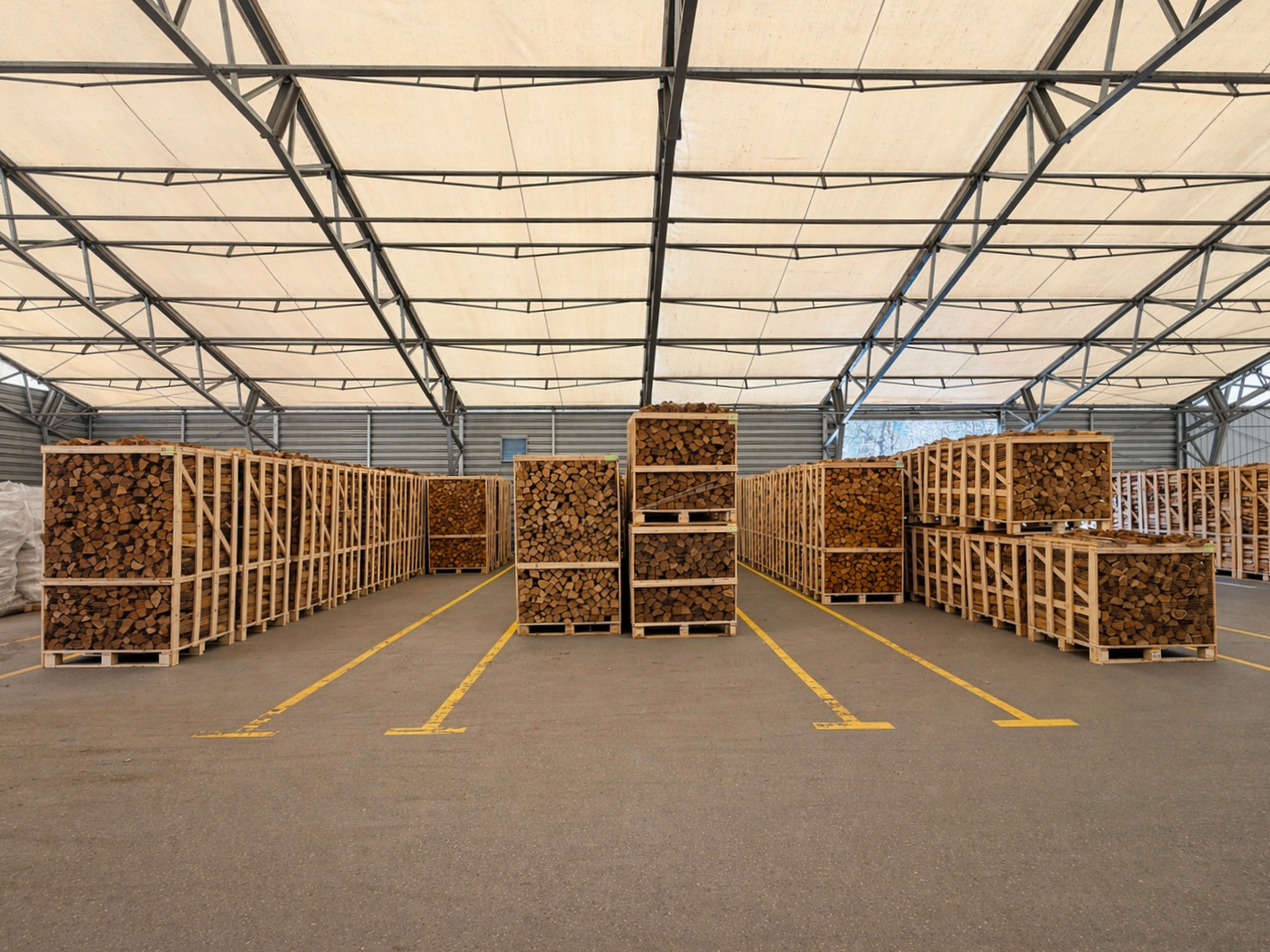
Sourcing wholesale kiln-dried firewood involves more than comparing a price per pallet or cubic metre. Moisture content, log dimensions, packaging, production capacity and delivery planning all affect what eventually reaches the customer.
Before confirming the next season’s volumes, buyers should understand exactly what a dry firewood supplier is offering and whether the same specifications can be maintained throughout the contract.
Here are seven questions worth asking.
1. What firewood moisture content will actually be delivered?
The word “dry” is not a specification. Ask for a defined moisture range, when the measurement is taken and how the result is recorded.
Moisture affects ignition, heat output, combustion and the customer’s overall experience. As a general reference, firewood at 18% moisture contains approximately 4.2 kWh/kg of energy, compared with about 2.9 kWh/kg at 40% moisture. The amount of useful heat delivered to the room will also depend on the efficiency of the appliance.
Vli Timber targets a moisture content of 10–18% for every kiln-dried batch. Drying cycles are managed using measured batch data rather than a fixed drying time alone.
2. How consistent are the log dimensions and specifications?
The agreed specification should cover more than nominal log length. Buyers should also clarify:
- permitted length tolerance;
- split size and diameter range;
- wood species or species mix;
- moisture range;
- packaging dimensions;
- expected volume or weight per package.
Vli Timber produces kiln-dried firewood in standard lengths of 25 and 30 cm, with a length tolerance of ±5 mm. Consistent dimensions make the product easier to package, store, display and use.
3. Can the supplier support the required volume during peak season?
Many suppliers can fulfil an individual order. The more important question is whether they can maintain the required volume when demand rises across several markets at the same time.
Ask about daily production capacity, kiln capacity, seasonal allocation and how far in advance larger volumes need to be reserved.
Vli Timber’s nominal production output is approximately 480 m³ per day, equivalent to around 14,400 m³ per month. From January to August 2026, the company produced approximately 91,896 m³ of firewood.
These figures provide useful context, but buyers should still agree on volumes and delivery schedules before the heating season begins.
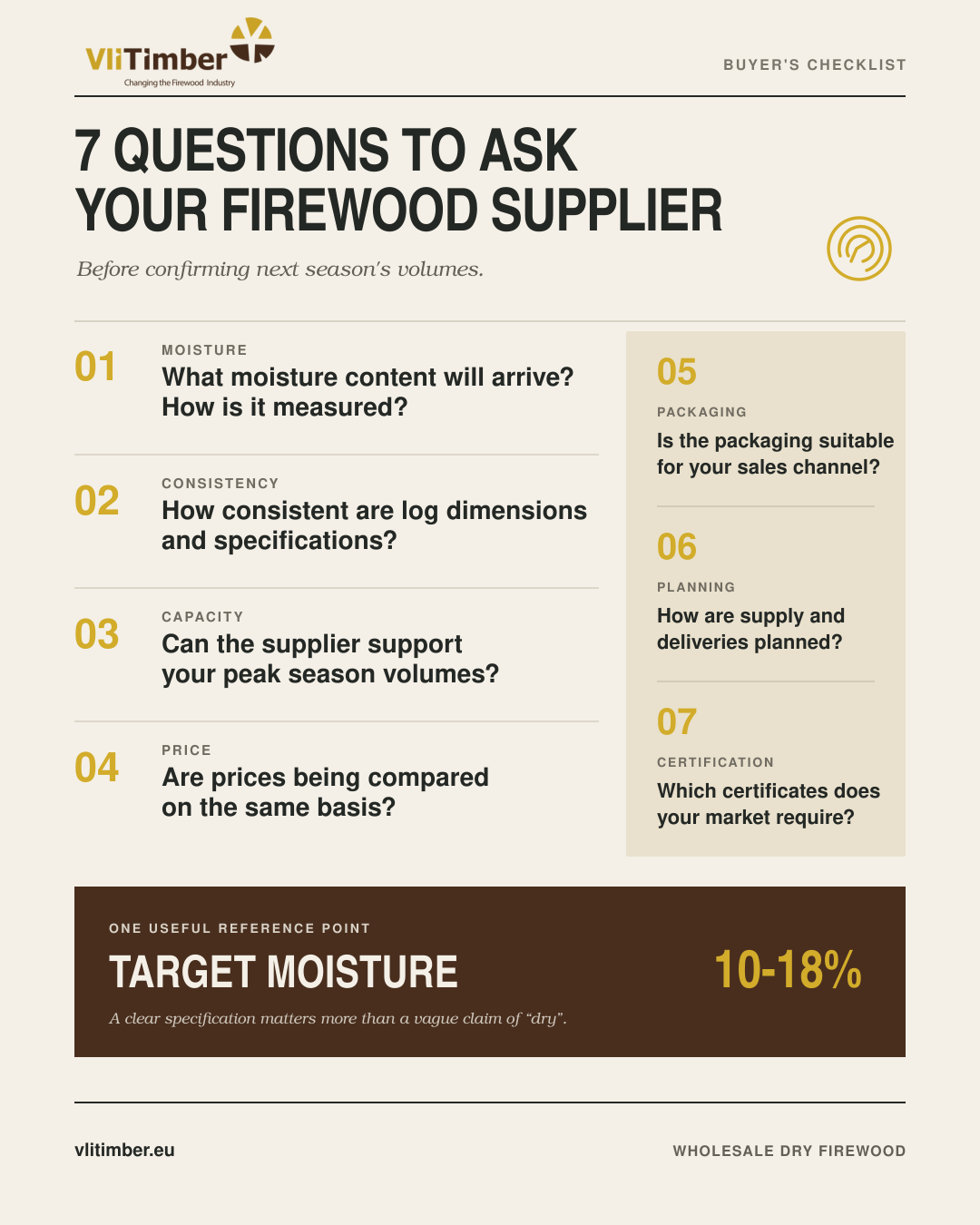
4. What exactly is included in the quoted price?
A lower price does not necessarily mean a lower total cost. To compare wholesale dry firewood offers properly, buyers need to check whether the quotations are based on the same conditions.
The comparison should include:
- firewood moisture content;
- wood species or species mix;
- log dimensions;
- package type and filled volume;
- number of units per truck;
- transport terms;
- labelling and private-label requirements;
- applicable certificates and documentation.
Comparing only the headline price can hide differences in usable product volume, energy content, transport efficiency and handling costs.
5. Is the packaging suitable for the sales channel?
Packaging influences much more than presentation. It determines how efficiently the product can be transported, unloaded, stored and displayed.
A wholesaler supplying retail chains may need a different format from a buyer distributing firewood through local dealers or direct delivery. Package strength, pallet dimensions, labelling and protection from weather should therefore be agreed before production begins.
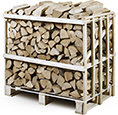
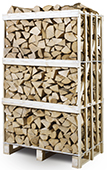
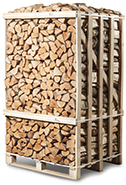
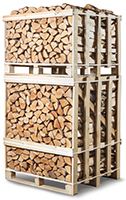
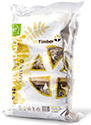
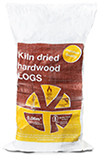
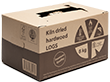
The Vli Timber firewood range includes large and small packaging formats for different wholesale and retail requirements, as well as private-label packaging options.
6. How is wholesale firewood supply planned?
Reliable supply is usually decided months before the first cold nights. Timber procurement, splitting, kiln schedules, packaging and transport all need to be coordinated before demand reaches its seasonal peak.
Ask the supplier:
- when production for the season begins;
- how customer volumes are allocated;
- whether delivery windows are agreed in advance;
- how changes in demand are managed;
- what happens if transport or production schedules shift.
A clear supply plan is more valuable than a general promise that stock will be available when required.
7. Which certificates apply to the product and the destination market?
Certificates should be checked against the exact product and market rather than treated as a general supplier claim.
Vli Timber holds FSC® Chain of Custody licence code FSC® C109548. FSC-certified kiln-dried firewood is available upon request, and qualifying orders include the relevant claim and documentation.
Depending on the product and destination market, other relevant credentials include Woodsure Ready to Burn certification, IPPC certification for wooden packaging, EPA Ireland registration and Stove Industry Association Fuel Membership.
More information is available on the Vli Timber certificates and memberships page.
A reliable firewood order starts with a clear specification
The right dry firewood supplier should be able to explain what will be delivered, how it is measured and how the agreed specification will be maintained across repeated orders.
Before confirming next season’s wholesale firewood supply, agree on moisture, dimensions, volume, packaging, price basis, delivery planning and certification in writing. These details reduce uncertainty for both sides and make price comparisons considerably more meaningful.
To discuss your upcoming volumes and receive a commercial offer, request a quote from Vli Timber.