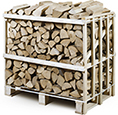
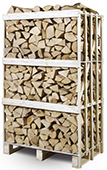
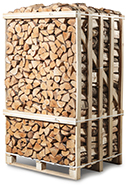
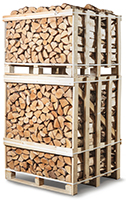

Science-Based Efficiency and Performance Advantages of Kiln-Dried Firewood
What Moisture Content Should High-Quality Firewood Have?
The optimal moisture content of high-quality firewood ranges between 8% and 20%. Within this range, particulate emissions are at their lowest, while heat output reaches its highest efficiency. Scientific and laboratory studies confirm that firewood within this moisture interval delivers more usable energy, produces fewer emissions, and places less stress on heating equipment.
As one of the leading industrial producers of kiln-dried firewood, VLI Timber applies controlled drying processes and quality standards throughout its production chain. More about the company’s background and production approach can be found on the About VLI Timber page.
Why Choose Kiln-Dried Firewood?
Kiln-dried firewood reaches a controlled moisture content of 15–20%, which allows users to:
-
generate up to 50% more heat compared to wet firewood;
-
reduce smoke formation and minimise creosote buildup in chimneys;
-
achieve more economical heating using a smaller volume of firewood;
-
ensure easy ignition and stable, consistent combustion.
Industrial-scale kiln drying ensures consistency that cannot be achieved through natural air drying alone. An overview of VLI Timber’s kiln-dried firewood production and product range is available on the VLI Timber website
How Moisture Content Affects Thermal Efficiency
According to a 2019 study by the Slovak University of Agriculture, increasing moisture content in wood leads to several negative effects:
-
lower thermal diffusion, meaning heat is released more slowly;
-
higher specific heat capacity, with energy wasted on evaporating water instead of heating spaces;
-
increased heat losses, as more energy escapes through the chimney rather than being transferred indoors.
In practical terms, wetter firewood results in lower efficiency and higher fuel consumption.
Comparison: Wet vs. Kiln-Dried Firewood
| Property | Wet Firewood | Kiln-Dried Firewood |
|---|---|---|
| Moisture content | 25–200% | 8–20% |
| Heat output | Low | High |
| Ignition | Slow | Fast |
| Particulate emissions | High | Low |
| Creosote risk | High | Minimal |
| Cost efficiency | Poor | Excellent |
Where and for Whom Is Dry Firewood Most Suitable?
Kiln-dried firewood is especially suitable for:
-
urban users, where emission levels are a key concern;
-
modern boilers and stoves that require low-smoke, high-efficiency fuel;
-
household safety, as reduced soot and creosote formation lowers fire risk.
Why Wet Firewood Is an Inefficient and Risky Choice
Wet firewood is not only inefficient, but also potentially hazardous over time:
-
incomplete combustion leads to excess smoke and air pollution;
-
a significant portion of energy is consumed by water evaporation instead of heating;
-
creosote accumulates in chimneys, increasing the risk of chimney fires.
Why Choose Kiln-Dried Firewood?
- Higher heat output
- Lower emissions
- Improved chimney safety
- Better long-term cost efficiency
For bulk supply, specifications, or cooperation enquiries, you can contact the VLI Timber team directly via the Contact VLI Timber page.